July 12, 2026
katie hope
elopement services
wedding services
How I Create Candid, Emotional Photos as a Zion Wedding Photographer
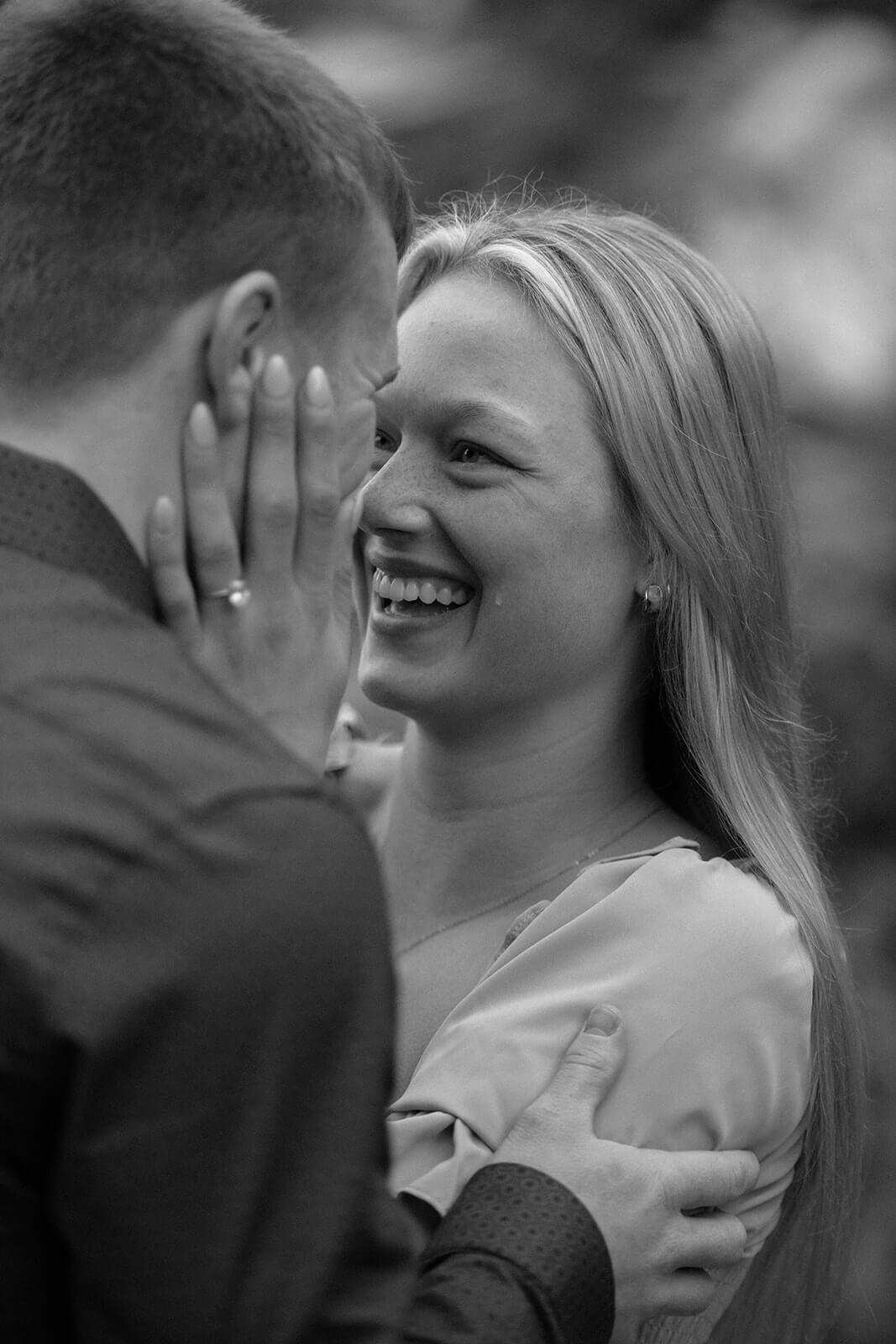
Table of Contents
What to expect, how I’ll guide you, and why you do not need to know how to pose
One of the first things almost every couple tells me is, “We’re awkward in front of the camera.”
Usually, that is followed by something like, “We’ve never had professional photos taken,” “We have no idea what to do with our hands,” or “My partner really hates having their picture taken.”
Here is what I want you to know before we ever begin: almost everyone feels that way.
The couples you see laughing, moving, holding each other, and looking completely comfortable in my photographs are not professional models. Most of them did not arrive knowing how to pose, and many were nervous when we started.
As your Zion wedding photographer, I am not expecting you to create the photographs for me. You do not need to memorize poses from Pinterest, rehearse a perfect smile, or spend your wedding day wondering whether you are standing correctly.
My job is to give you enough guidance that you feel supported while leaving room for your actual relationship to come through. Sometimes I will place you in a flattering position. Sometimes I will give you something simple to do. Other times, I will recognize that a beautiful moment is already unfolding and quietly photograph it without interrupting.
My approach blends candid observation, natural movement, and cinematic directing. The result is an experience that feels relaxed and photographs that feel emotional, alive, and unmistakably like you.
Candid Photographs Still Begin With Intention
There are many parts of a wedding day that do not need direction. During your ceremony, I am watching for the way your partner reacts when they first see you, the hand reaching for yours during the vows, the expression on a parent’s face, and the laughter that escapes when something does not go exactly according to plan.
Those moments are already happening. My job is to notice them.
Portraits are a little different. Many of the relaxed, movement-filled photographs you see in my work begin with a small amount of intention. I may place you in beautiful light and ask you to walk, sway, hold hands, lean together, or slowly pull each other closer.
The beginning is directed, but what happens inside of it is not completely planned.
You might bump into one another and laugh. Your partner may brush your hair away from your face. You may whisper something, pull closer, kiss, or change the position without realizing it. Those small, unscripted moments are where direction begins to feel candid.
I am not trying to manufacture a false moment. I am simply creating enough structure for a real one to happen.
What Cinematic Directing Means in My Work
Cinematic wedding photography is often described as a particular editing style, dramatic light, or photographs that resemble movie stills. For me, the cinematic quality begins before I ever edit a photograph.
It starts with how I see and direct a scene.
Rather than moving you through a disconnected checklist of poses, I think about the full environment and the emotional rhythm of the moment. I consider where you are, how the light is moving, what the landscape is contributing, and what this particular part of your day should feel like.
The directing process moves through five ideas: scene, emotion, action, variation, and pause.
First, I look at the scene. You may be standing on a quiet overlook above Zion Canyon, walking beneath cottonwoods, getting ready in a room filled with friends, or sharing dinner beneath glowing string lights. The location is not simply a background. It affects the mood, movement, and visual story.
Next, I think about the emotion already present. A playful moment needs different direction from a quiet one. Photographs made immediately after your vows should not feel exactly like portraits created while you are running through the desert at sunset.
From there, I give you an action that supports that feeling. You may walk toward one another, pull apart and return, rest your forehead against your partner’s, trace a hand along an arm, or take a slow breath together.
Once something begins to work, we do not immediately abandon it for another pose. We stay with it and allow it to evolve. A walk may become a hug. A hug may become a sway. A sway may become a quiet moment with your eyes closed. I may step farther away to include the landscape, then move close enough to photograph your hands or the expression crossing your face.
Finally, I leave room for the pause.
The pause after the movement is often where the most honest photograph lives. It may be the breath after laughter, the way your hands remain connected after pulling apart, or the expression that appears when you think the direction is finished.
The action creates energy. The pause reveals what remains.
I Direct Connection, Not a Performance
Cinematic directing does not mean asking you to act like characters in someone else’s love story.
You will never be expected to manufacture emotion, perform dramatic romance, or recreate another couple’s photographs frame for frame. Instead, I may give you a prompt that helps you reconnect with something that already belongs to you.
I might ask you to close your eyes and take two breaths together, tell your partner the first thing you noticed about them, or hold each other the way you do when one of you needs comfort. These are not instructions to “look emotional.” They simply give you something real to focus on besides the camera.
Other times, the direction will be lighthearted. I may ask you to pull each other around, bump shoulders, steal a hat, attempt a kiss while the other person dodges, or walk together while trying not to move in a perfectly straight line.
The tone depends on your relationship and what the moment needs.
Some couples are playful and physical. Some are quiet and deeply affectionate. Some tease each other relentlessly. Others feel most connected simply standing shoulder to shoulder and watching the light change.
I will not force you into another couple’s personality. If your relationship is gentle, your photographs can be gentle. If the two of you are ridiculous together, there will be room for that. If you are more reserved, we do not need to create an exaggerated version of romance for the camera.
My job is to notice how you naturally connect and direct from there.
Movement Helps You Forget About the Camera
When people are asked to stand completely still, they usually become more aware of themselves. Suddenly, you are thinking about your hands, your posture, your expression, and whether your head is tilted at a strange angle.
Movement gives your brain something else to do.
It can be large and playful, but it can also be incredibly subtle. You might sway together, shift your weight, brush hair away from a face, trace your partner’s arm, lean closer, or take a slow breath and allow your shoulders to relax.
One movement can also create a surprising amount of variety. A short walk may give us a wide photograph beneath the cliffs, a close image of your hands, a quiet expression exchanged between you, and the laughter that happens when one of you wanders in the wrong direction.
You do not need to perform continuously. You simply need to remain loose enough for the moment to change.
This is especially helpful during Zion National Park wedding photography, where the environment is always contributing something. Wind moves through clothing and hair. Sandstone reflects warmth back into the scene. A narrow trail naturally brings you closer together, while an open overlook creates a feeling of scale and freedom.
Instead of fighting those elements, we use them.
If the wind arrives, we may turn into it and let it create movement. If the temperature drops, I may ask you to fold into one another for warmth. If we are standing beneath an enormous canyon wall, I may step far away and allow the landscape to show how small and connected you are within it.
At other times, I will move close enough that Zion nearly disappears, leaving only a hand, an expression, or the space between your faces.
The wide photographs show where your story is happening. The intimate photographs show why it matters.
I Photograph the Whole Scene, Not One Perfect Pose
A film does not tell its story with one isolated frame, and I do not approach your wedding gallery as a collection of unrelated hero images.
I photograph in sequences.
A scene may begin with a wide photograph showing the cliffs, weather, light, and location. Then I move closer to photograph the way you are standing together. I may capture your hands, your clothing moving in the wind, one person’s expression, the other person’s reaction, and the quiet stillness after the action.
This gives your gallery rhythm and allows the photographs to work together. You receive expansive images that show the landscape, emotional portraits that belong on your walls, and small details that may bring the entire moment rushing back years from now.
The goal is not simply to create one beautiful Zion wedding photograph. It is to create a visual record of how the experience unfolded.
Your Portrait Experience Has a Natural Arc
We will not begin with the most intimate direction I have. The experience needs time to develop.
At the beginning, we use easy movement. Walking, holding hands, gentle touches, and looking toward the landscape help you settle in without feeling overly exposed. This is the warm-up, and it is supposed to feel simple.
Once you are more comfortable, we can add playful energy. You may pull each other around, spin, dance, run, or do something that gives your brain a job besides thinking about the camera.
From there, the movement becomes slower and more grounded. You may sway, breathe together, rest into one another, or remain close without speaking. By this point, I usually need to give you less direction because you are no longer monitoring every movement.
The deepest photographs often happen here, when a hand on a face, a forehead touch, or a full-body embrace is enough.
Rather than ending suddenly, I like to let the experience taper naturally. We may finish by walking away together, sitting quietly, resting your head on your partner, or watching the final light leave the canyon.
The ending deserves room too.
You Will Always Know What to Do
You will never be dropped into the desert and told to “just act natural.”
I will guide you throughout the experience. Sometimes I will describe what I want, and sometimes I will demonstrate it so you can mirror me. My directions are usually simple and easy to build upon.
I may ask you to stand close, hold hands, and slowly pull away before coming back together. From there, I might ask you to sway, lean closer, look toward each other, or take a breath and soften into the position.
If something needs more precision, I will step in and adjust a hand, shift your angle, or help place you in a more flattering position. I do use traditional posing when it is useful. I simply do not expect you to freeze inside a rigid position while I take the same photograph repeatedly.
The pose gives us a starting point. Movement and connection give it life.
There may also be moments when I stop talking.
That is a good sign.
It usually means the light is beautiful, the moment is working, and I am moving around to photograph it from different angles. When I become quiet, you do not need to panic and invent a new activity. Continue what you are doing, stay close, keep moving gently, or allow the moment to become still.
Silence usually means I found something.
You Do Not Need to Feel Comfortable Immediately
The first few minutes in front of a camera can feel strange. You may suddenly become aware of how you stand and briefly forget what normal people do with arms.
That does not mean the experience is going badly. It means you are warming up.
We begin with uncomplicated movement while I learn how you naturally interact. Some people relax almost immediately. Others need more guidance and a little more time. Both are completely normal.
As we continue, your shoulders soften. You start paying more attention to each other than to me. The direction becomes easier, the pauses become quieter, and the photographs begin to feel more like you.
This is also why having enough photography time matters. A relaxed timeline gives us room to build toward something rather than expecting instant intimacy on a stopwatch.
A Few Things You Can Practice at Home
You do not need to practice posing before your wedding, but trying a few simple movements can make the experience feel less mysterious. Think of this as play rather than homework.
Start with a moving hug. Stand facing each other and hug, but do not freeze. Sway gently, pull closer, relax back slightly, and settle in again. Try resting your head against a shoulder, cheek, chest, or forehead.
Pull apart and return. Hold hands and take a small step away from each other. Create a little tension through your arms, then slowly pull back together. You can return to a hug, pass each other, turn beneath an arm, or bump shoulders along the way.
Walk without marching. Take a slow walk together while holding hands. Look at each other, glance toward the ground, watch the landscape, or let one person lead. Do not worry about matching your steps or walking in a perfectly straight line.
Practice softening. Stand close, take a breath, and let your shoulders drop. Relax your hands and allow your weight to settle toward each other. This is what I mean when I ask you to soften or melt into a position.
Notice how your hands connect. Slowly trace your partner’s arm, shoulder, hair, cheek, or jaw. Hold the back of their neck, rest a hand on their chest, or lace your fingers together. Hands tell a story when they are connecting rather than anxiously searching for somewhere to go.
You can also pay attention to the way you naturally sit together, hug, hold hands, or lean into one another at home. Those small habits are valuable. Tell me about them or show them to me. They give us a much more meaningful starting point than copying someone else’s pose.
What You Can Stop Worrying About
You do not need to memorize a shot list, rehearse your smile, monitor your hands every second, or look at the camera unless I ask you to.
You also do not need to act more romantic, adventurous, serious, or outgoing than you are.
Your job is to arrive willing to move, connect, and trust the process. I will take care of the direction, light, location, timing, composition, and angles.
As a local Zion wedding photographer and Southern Utah elopement photographer, I will also help plan around the terrain, crowds, seasonal conditions, travel time, and changing canyon light.
You get to experience the day.
The Best Photographs Often Happen After the Direction
A photograph may begin with me asking you to walk toward each other, but the image you love most might happen afterward, when one of you laughs, adjusts an outfit, or reaches back for the other.
It may happen in the breath after a kiss, the stillness after running, or the second when the wind interrupts everything we were attempting.
That is why I continue photographing through the transition.
The movement helps you forget about the camera. The variation gives the scene depth. The pause allows something honest to surface.
I am not searching for one perfect pose. I am creating a scene, giving it room to evolve, and watching for the moment when the direction disappears and the two of you remain.
What to Expect From Me as Your Zion Wedding Photographer
You can expect clear guidance without feeling micromanaged, natural movement without forced antics, and enough structure to help you feel confident.
You can expect me to photograph both the enormous landscape and the tiny details within it. I will notice the cliffs, the light, the weather, and the way you reach for one another when you think nobody is watching.
Most importantly, you can expect photographs that hold more than an attractive pose. They will carry the movement, atmosphere, and emotional texture of the experience.
Be willing to feel slightly awkward at the beginning. Move even when you are unsure. Tell me when something does not feel right, stay connected to each other, and trust that I will guide you through the rest.
When you hear me say, “That looks amazing, keep going,” believe me.
You are doing it right.
Planning a Wedding or Elopement in Zion?
If you are searching for a Zion wedding photographer who combines candid observation, cinematic direction, local knowledge, and an experience built around genuine connection, I would love to hear what you are planning.
Whether you are getting married in Springdale, creating an intimate celebration near Zion National Park, or planning a full-day Southern Utah elopement, we can make photographs that feel natural, emotional, and entirely your own.
